

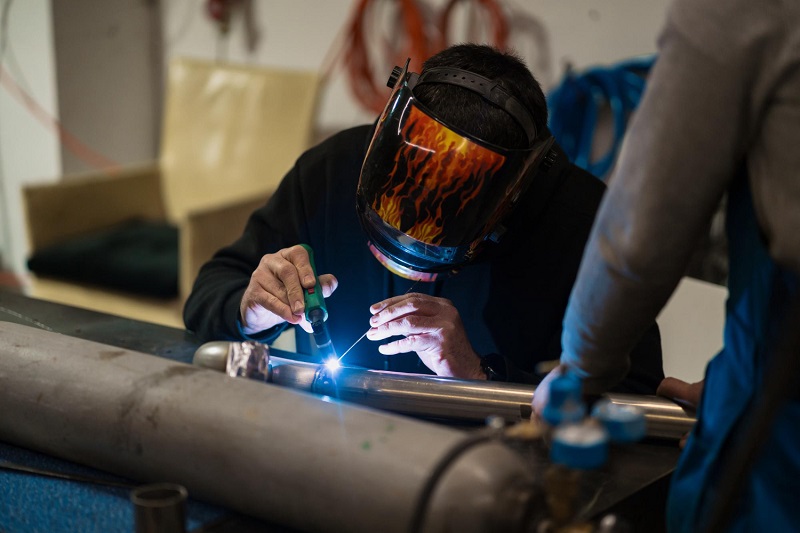
Laser welding is transforming modern manufacturing with its precision, speed, and adaptability. This advanced technique enables clean, high-strength welds across various materials, making it essential in industries like automotive, aerospace, electronics, and medical devices.
From intricate micro-welding to large-scale production, laser welding offers unmatched efficiency and quality. In this article, we explore the top applications that highlight how laser welding drives innovation and improves product performance in today’s competitive industrial landscape.
Automotive Industry Advancements
The automotive sector utilizes a laser welding process to efficiently join body panels and produce lighter, stronger vehicle structures. High-precision welds improve crash safety while reducing excess material waste.
Additionally, automation allows for faster production cycles with minimal human intervention. From battery enclosures to exhaust systems, laser welding contributes to durable, corrosion-resistant assemblies that last longer and perform better across vehicle models.
Electric Vehicles and Battery Packs
Laser welding is essential for assembling electric vehicle battery packs. It creates strong, precise joints between aluminum and copper components, ensuring performance and safety.
Joining dissimilar metals without damaging sensitive battery elements is possible with a laser welding system. This application enhances energy efficiency and enables compact battery module designs in EV production.
Aerospace and Aviation Components
Aerospace manufacturing demands high-strength welds with zero room for defects. Thanks to laser welding, critical parts like turbine blades and fuel systems achieve superior joint integrity.
Lightweight structures such as titanium fuselage segments are joined with minimal heat input, preserving material properties. Laser welding ensures consistency, enabling aerospace firms to meet stringent industry safety standards.
Heat-Resistant and Lightweight Materials
Laser welding is ideal for joining heat-resistant alloys and lightweight composites commonly used in jet engines. Precision control helps avoid warping and ensures longer component life.
Materials like Inconel benefit from deep penetration welding without surface damage. This method reduces overall component weight and increases flight efficiency for modern aircraft.
Electronics and Microfabrication
The electronics industry relies heavily on laser welding for joining tiny components in mobile devices, wearables, and computing hardware. Its pinpoint accuracy avoids overexposure to heat-sensitive elements.
For connectors, microcircuits, and casings, laser welding provides clean, residue-free joints that maintain electro-conductivity. This technology supports the trend of miniaturization across digital products and optical devices.
Medical Device Assembly
Medical devices demand flawless hygiene and structural precision. Laser welding is ideal for joining stainless steel and titanium parts in surgical instruments, implants, and catheters.
The process ensures no contamination or microfractures. This capability promotes biocompatibility, patient safety, and long-term durability, essential in health-critical manufacturing environments.
Tool and Die Manufacturing
Laser welding restores worn dies and moulds used in stamping and injection moulding. It allows manufacturers to repair expensive parts instead of replacing them entirely.
This technique delivers localized heat input, minimizing nearby damage. By adding small, precise amounts of filler metal, laser welding extends the tool’s operational life and reduces overall production costs.
Jewellery and Luxury Goods
High-end watchmakers and jewellers use laser welding to assemble delicate pieces without visible seams. The process enhances aesthetics while preserving intricate design details.
From gold to platinum, laser precision ensures permanent bonds in fine luxury accessories. It enables rapid customization and prototyping for exclusive product lines.
Renewable Energy Systems
Laser welding contributes to the assembly of wind turbines, solar panels, and hydrogen fuel cells. It creates airtight joints essential for reliability and energy output.
Heat exchangers and pressure vessels often require precise welds to handle fluctuating temperatures. Laser welding ensures structural integrity even under harsh environmental conditions, promoting sustainable energy solutions.
