

You might be looking in the mirror and noticing more than just crooked teeth. Maybe it is the way your smile sits in photos, the way your bite feels at the end of the day, or the quiet worry that small alignment issues could turn into larger dental problems over time. That mix of cosmetic concern and practical stress is real, and it can leave you wondering whether clear aligners or braces are only about appearance, or whether they can change your dental health in a deeper way. If you are searching for guidance from a dental office in Woburn, MA, understanding how orthodontic treatment supports both appearance and long-term oral health can help you make a more confident decision.
The short answer is yes. The Impact Of Invisalign And Orthodontics On Cosmetic Dentistry goes far beyond straightening teeth for looks alone. When teeth are moved into better position, your smile can look more even, your bite can work with less strain, and future cosmetic or restorative dental work may become simpler and last longer. That is why orthodontic care often connects closely with general, cosmetic, and restorative dentistry.
Why do Invisalign and orthodontic treatment matter for more than a straighter smile?
It is easy to think of orthodontics as a cosmetic extra, especially if your teeth function well enough and you have learned to live with small flaws. But “well enough” can still come with wear, crowding, cleaning problems, and uneven pressure on certain teeth. According to MedlinePlus information on orthodontia, orthodontic treatment can help correct bite issues, crowding, and alignment problems that affect both health and appearance.
Because of this connection, cosmetic dentistry often starts with alignment. If teeth are crowded, twisted, or spaced too far apart, treatments like bonding, veneers, or whitening may not create the balanced result you want on their own. In many cases, clear aligners and cosmetic dentistry work best together, with tooth movement creating the foundation for a more natural final result.
So, where does that leave you if your main goal is cosmetic improvement? It means you may not need to choose between health and appearance. A better bite and a more even smile often support each other.
How can misalignment affect cosmetic dentistry results?
If a tooth sits too far forward, overlaps another tooth, or bites unevenly, cosmetic work can become more limited. A veneer may need to cover a tooth that would have looked better with minor movement first. A crown may face extra pressure if your bite is off. Even whitening can look uneven when teeth overlap and create shadows.
There is also the issue of wear. An improper bite can lead to chipped edges, enamel loss, jaw tension, or gum irritation. In some cases, people seek cosmetic treatment because their smile looks worn down, when the deeper problem is actually alignment. MedlinePlus also explains how malocclusion, or a bad bite, can affect oral function, which helps explain why cosmetic concerns and bite concerns often overlap.
That is one reason many dentists look at the full picture before recommending aesthetic treatment. If your teeth are not in a stable position, cosmetic improvements may look good at first but face more stress over time. When alignment is addressed first, restorative and cosmetic work can often be more conservative, meaning less drilling, less reshaping, and a result that fits your natural bite more comfortably.
What is the role of Invisalign in modern smile design?
Invisalign has changed how many adults think about orthodontic care. For people who want a more discreet option, clear aligners can feel easier to accept than traditional braces, especially in work or social settings. That matters, because adults often delay treatment not because they do not care, but because they do not want their treatment to become the first thing people notice.
At the same time, aligners are not only about convenience. They can be a strong tool in orthodontics in cosmetic dentistry when the case is a good fit. Small gaps, mild crowding, and certain bite issues can often be improved in a way that supports later whitening, bonding, veneers, or restorative treatment. For adults who want a smile refresh without overdoing it, this step can make the final outcome look cleaner and more natural.
For a helpful overview of options for adults, the University of Alabama at Birmingham shares useful guidance on adult orthodontics with braces and aligners. That kind of information can help you understand why treatment plans are rarely one size fits all.
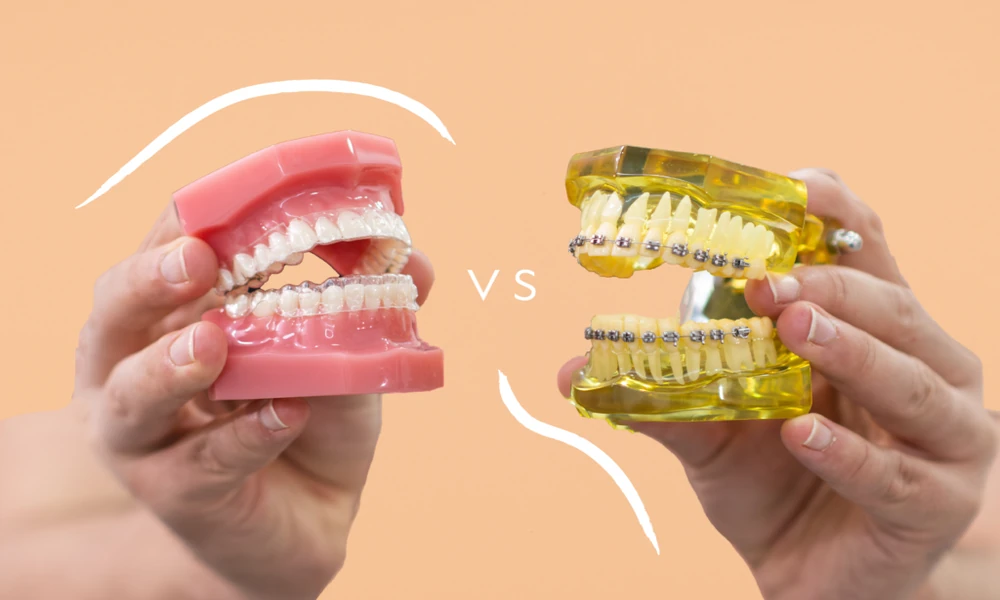
Which practical differences should you weigh before choosing braces or clear aligners?
If you are trying to compare options, the right question is not only which one looks better during treatment. It is also which one fits your dental needs, habits, and long term cosmetic goals.
| Factor | Invisalign or Clear Aligners | Traditional Braces |
|---|---|---|
| Appearance | Less noticeable, often preferred by adults seeking cosmetic improvement | More visible, though some options are less noticeable than older styles |
| Removability | Removable for eating and brushing, which can help with hygiene | Fixed in place, which removes the risk of forgetting to wear them |
| Best for | Mild to moderate alignment issues, depending on the case | Simple to complex tooth and bite movement |
| Daily discipline | Requires consistent wear for results | Less dependent on patient compliance during the day |
| Cosmetic dentistry planning | Often useful before whitening, bonding, or veneers | Also useful before cosmetic or restorative treatment, especially for larger bite corrections |
A real life example may help. If you have minor crowding and want whitening plus a more even smile, aligners may be enough to create the spacing and symmetry needed. If you have a deeper bite and visible wear on front teeth, braces or more advanced orthodontic planning may be the better first step before any restorative work begins.
What can you do right now if you are thinking about smile correction?
1. Start with your bite, not just the mirror.
If you are focused on appearance, that makes sense, but ask whether your teeth also feel crowded, worn, or hard to clean. Cosmetic goals are important, yet the best results often come from solving the function issue underneath the surface.
2. Ask how orthodontic treatment affects future dental work.
If you are considering veneers, bonding, crowns, or implants, ask whether alignment first could reduce the amount of restorative work needed. Sometimes moving teeth into a better position allows for a more conservative plan.
3. Choose a plan that fits your real habits.
Clear aligners only work if you wear them as directed. Braces may be a better option if you want less daily responsibility. Be honest about your routine, because the most appealing treatment on paper is not always the one that works best in daily life.
What does all of this mean for your next step?
If you have been thinking that a straighter smile is only about looks, it may help to see the bigger picture. The impact of aligners, braces, and related smile correction often reaches into comfort, bite balance, oral hygiene, and the success of future cosmetic or restorative treatment. When your teeth are in better position, your smile can look better, function better, and support dental work more predictably.
You do not need to figure it all out at once. A thoughtful dental evaluation can help you understand whether orthodontic treatment, cosmetic improvements, or a combination of both makes the most sense for your goals. With the right plan, your smile does not have to be either healthy or attractive. It can be both.
